
If you’re searching for the best Cacio e Pepe recipe, this authentic Roman pasta dish proves that simple ingredients can create extraordinary flavor.
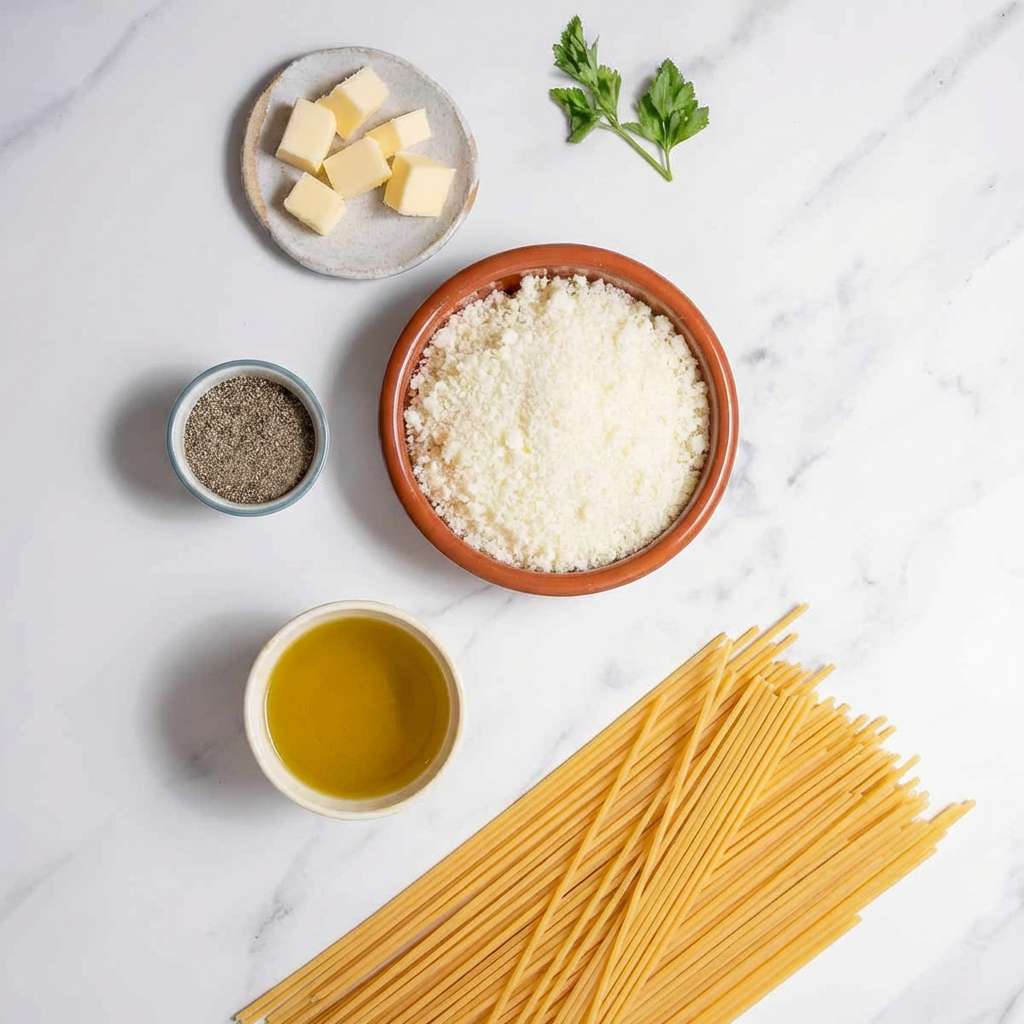
Made with just pasta, Pecorino Romano cheese, freshly cracked black pepper, and pasta water, Cacio e Pepe delivers a rich, creamy sauce without using cream or butter. This easy Italian pasta recipe is perfect for quick weeknight dinners while still feeling elegant and restaurant-worthy.
This step-by-step guide shows you how to make traditional Cacio e Pepe with a perfectly smooth, creamy sauce every time.
Why You’ll Love This Authentic Cacio e Pepe Recipe
Cacio e Pepe, which translates to “cheese and pepper,” is one of the most iconic dishes in Roman cuisine. The secret lies in technique—properly emulsifying cheese and pasta water creates the signature silky sauce that coats every strand of pasta.
Reasons this recipe stands out:
- Authentic Roman pasta recipe
- Only a few simple ingredients required
- Ready in under 30 minutes
- Naturally creamy without heavy cream
- Perfect beginner-friendly Italian classic
How to Make Cacio e Pepe (Step-by-Step)
Boil the Pasta
Bring a large pot of salted water to a boil and cook the spaghetti according to package instructions until al dente. Before draining, reserve about 1½ cups of the pasta cooking water. This starchy water is essential for creating the creamy sauce.
Toast the Black Pepper
In a large skillet over medium heat, add the freshly cracked black pepper and toast it for about 1 minute until fragrant. This step enhances the pepper’s aroma and gives the dish its signature bold flavor.
Add a small ladle of pasta water to the skillet to create a lightly pepper-infused base.
Transfer Pasta to the Skillet
Using tongs, transfer the cooked pasta directly into the skillet with the pepper mixture. Toss to coat the pasta evenly, allowing it to absorb the pepper flavor.
Create the Cheese Sauce
Remove the skillet from direct heat to prevent the cheese from clumping. Gradually sprinkle in the finely grated Pecorino Romano while tossing continuously. Add small splashes of reserved pasta water as needed to help melt the cheese and create a smooth, creamy sauce.
The key is to add cheese slowly and keep the pasta moving so the sauce emulsifies properly.
Adjust Consistency
If the sauce appears too thick, add a little more pasta water until the texture becomes silky and glossy. If too thin, sprinkle in a bit more grated cheese while tossing.
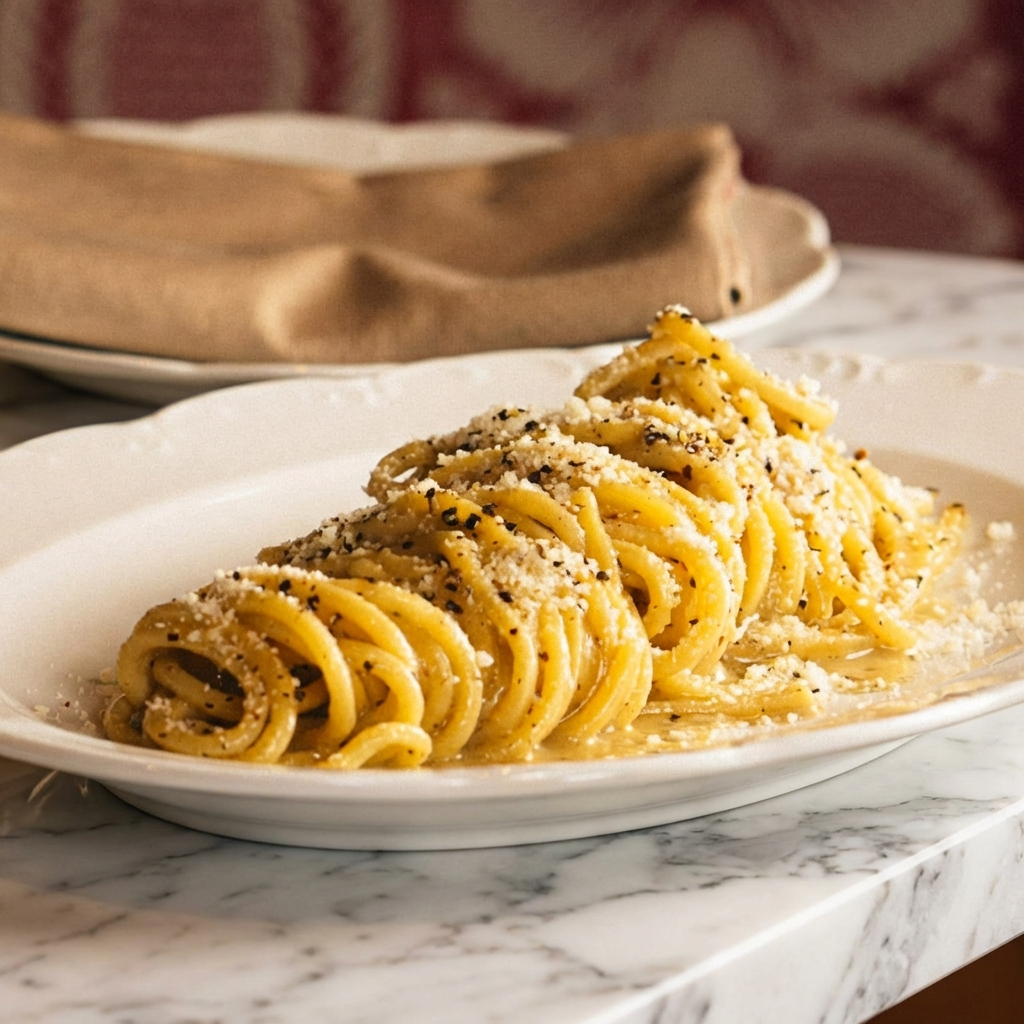
The finished sauce should cling smoothly to each strand of pasta.
Serve Immediately
Plate the pasta right away and finish with additional grated Pecorino Romano and freshly cracked black pepper. Serve hot for the best flavor and texture.
Pro Tips for Perfect Cacio e Pepe
- Use finely grated Pecorino Romano so it melts smoothly.
- Always remove the pan from heat before adding cheese.
- Reserve plenty of pasta water for adjusting the sauce.
- Use freshly cracked black pepper for authentic flavor.
- Toss continuously to prevent cheese clumping.
Serving Suggestions
This classic Cacio e Pepe pasta pairs beautifully with:
- Crisp green salads
- Roasted vegetables
- Garlic bread
- Light Italian appetizers
- Sparkling water or white wine
Because the dish is rich and flavorful, simple sides complement it best.
Common Mistakes to Avoid
Many home cooks struggle with Cacio e Pepe because of sauce separation. Avoid these common issues:
- Adding cheese over high heat, which causes clumping
- Using pre-shredded cheese that doesn’t melt well
- Skipping pasta water, which prevents emulsification
- Adding too much cheese at once
Following the correct technique ensures the creamy texture that defines authentic Roman Cacio e Pepe.
Easy Variations
Although traditional Cacio e Pepe uses only a few ingredients, you can adapt it slightly:
- Cacio e Pepe with Butter: Add a small amount of butter for extra richness.
- Lemon Cacio e Pepe: Add a touch of lemon zest for brightness.
- Cacio e Pepe with Mushrooms: Sauté mushrooms separately and toss with pasta.
- Protein Additions: Serve alongside grilled chicken or shrimp for a fuller meal.
Storage and Reheating Tips
Cacio e Pepe is best enjoyed fresh, but leftovers can be stored in an airtight container in the refrigerator for up to 2 days. Reheat gently in a skillet with a splash of water to loosen the sauce while stirring continuously.
Because the sauce is cheese-based, microwaving may cause separation, so stovetop reheating is recommended.
Frequently Asked Questions
What pasta is best for Cacio e Pepe?
Spaghetti, tonnarelli, or bucatini are traditional because they hold the creamy sauce well.
Can I substitute Parmesan for Pecorino Romano?
Pecorino Romano is traditional and provides the signature sharp flavor, but a blend of Parmesan and Pecorino can be used if desired.
Why did my cheese clump?
Cheese usually clumps when added over high heat or without enough pasta water. Always remove the pan from heat and add cheese gradually.
Final Thoughts
This Authentic Cacio e Pepe recipe proves that the simplest ingredients can create one of the most delicious pasta dishes in Italian cuisine. With perfectly cooked pasta, bold black pepper, and a silky Pecorino Romano sauce, this timeless Roman classic delivers elegant flavor in under 30 minutes. Once you master the technique, this easy Cacio e Pepe pasta recipe will quickly become one of your go-to meals for quick dinners, comfort food cravings, or impressive Italian-inspired entertaining.