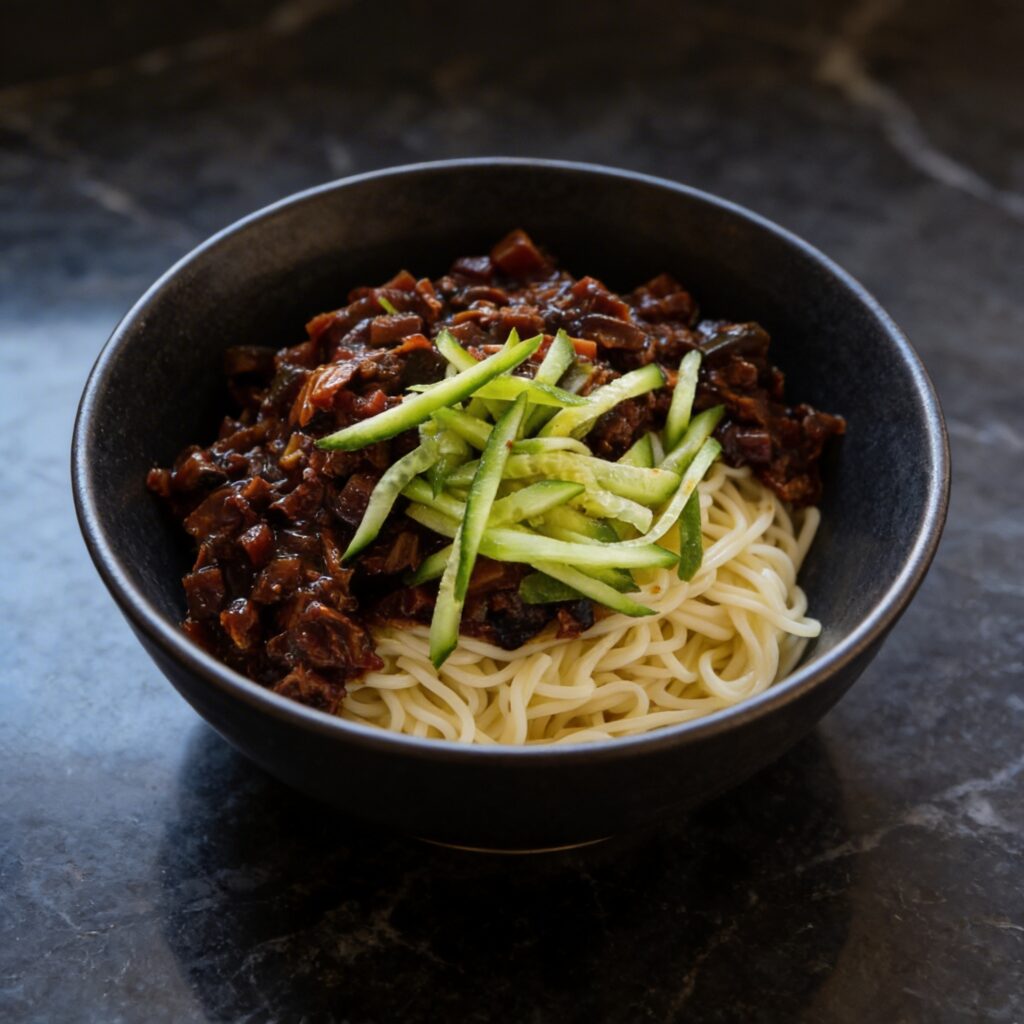
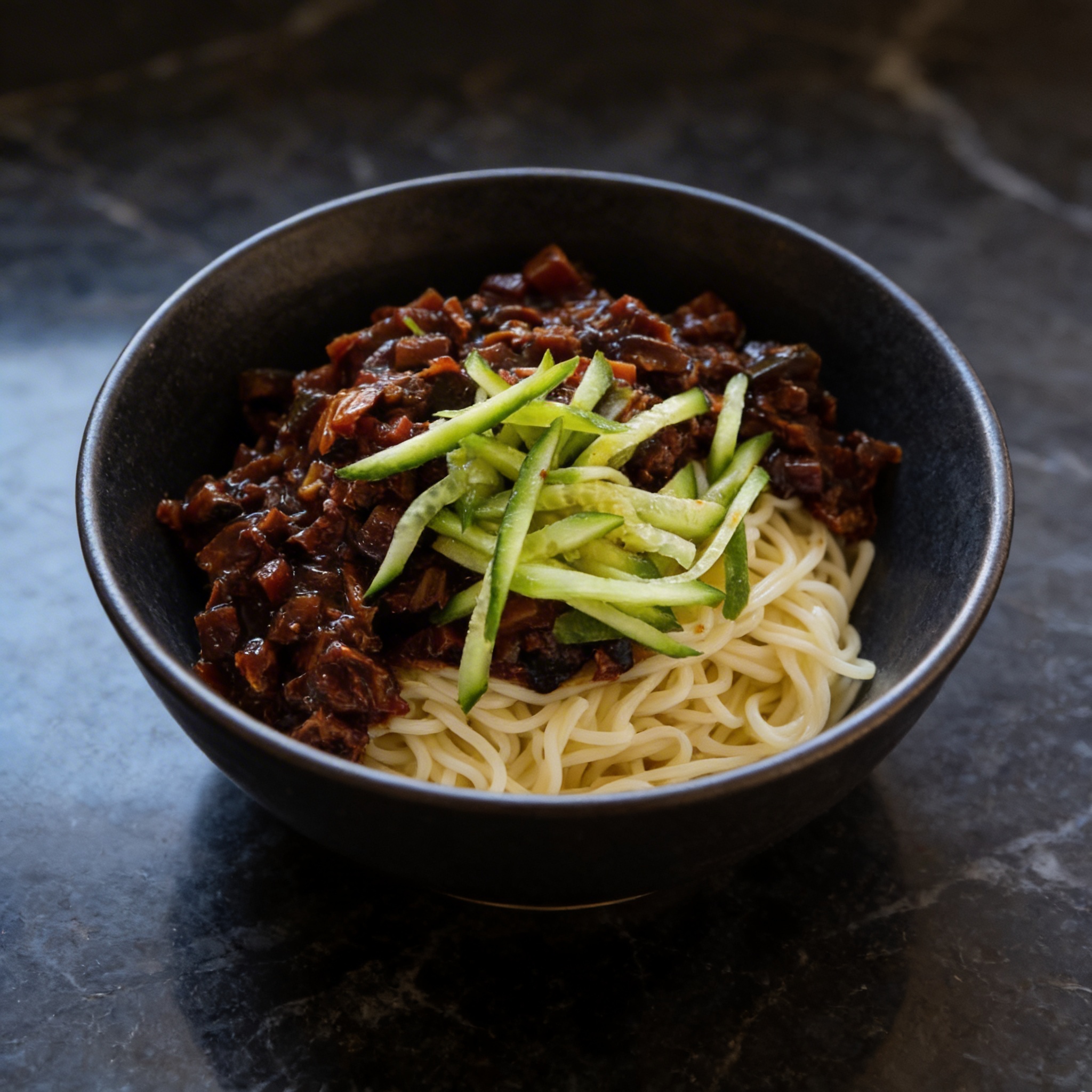
If you’re craving a deeply savory, umami-packed noodle dish that feels like pure comfort in a bowl, Jjajangmyeon is exactly what you need.
This beloved Korean-Chinese classic features thick, chewy noodles coated in a rich black bean sauce made with pork, onions, and vegetables. It’s hearty, glossy, slightly sweet, and completely satisfying.
Jjajangmyeon is known for its signature black bean paste—chunjang—which gives the sauce its deep color and bold flavor. While it may look complex, making it at home is surprisingly straightforward.
Follow this step-by-step guide and you’ll have restaurant-quality black bean noodles in your own kitchen.
Why You’ll Love This Recipe
- Deep, savory umami flavor
- Thick, glossy sauce that clings to noodles
- Comforting and filling
- Customizable with vegetables or seafood
- Easier than you think to make at home
This dish is perfect for cozy nights, family dinners, or when you want something indulgent yet comforting.
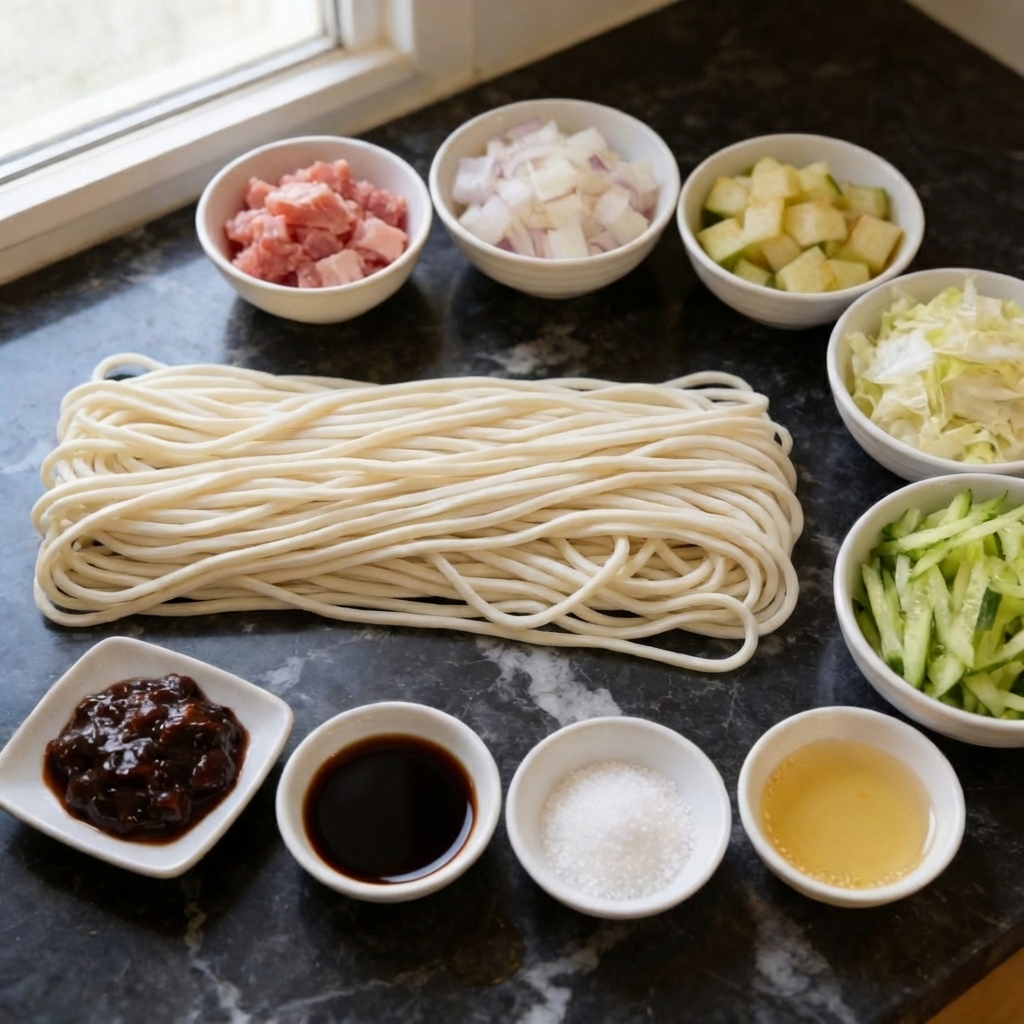
Prep All Ingredients
Before you begin cooking, dice the pork and vegetables into small, even pieces. Small cubes ensure even cooking and better texture in every bite.
Have everything measured and ready. Jjajangmyeon comes together quickly once you start cooking.
Cook the Pork
Heat a large wok or deep skillet over medium-high heat. Add the neutral oil.
Add the diced pork and cook for 4–5 minutes until browned and slightly crispy around the edges. The rendered fat adds depth and richness to the sauce.
If excess grease accumulates, carefully drain a small portion, leaving enough for flavor.
Fry the Black Bean Paste
Push the pork to one side of the pan. Add the chunjang to the cleared space with a bit of oil.
Stir-fry the paste for 1–2 minutes. This step is crucial—it removes bitterness and enhances the deep, savory flavor of the black bean paste.
Mix the fried chunjang into the pork until evenly coated.
Add the Vegetables
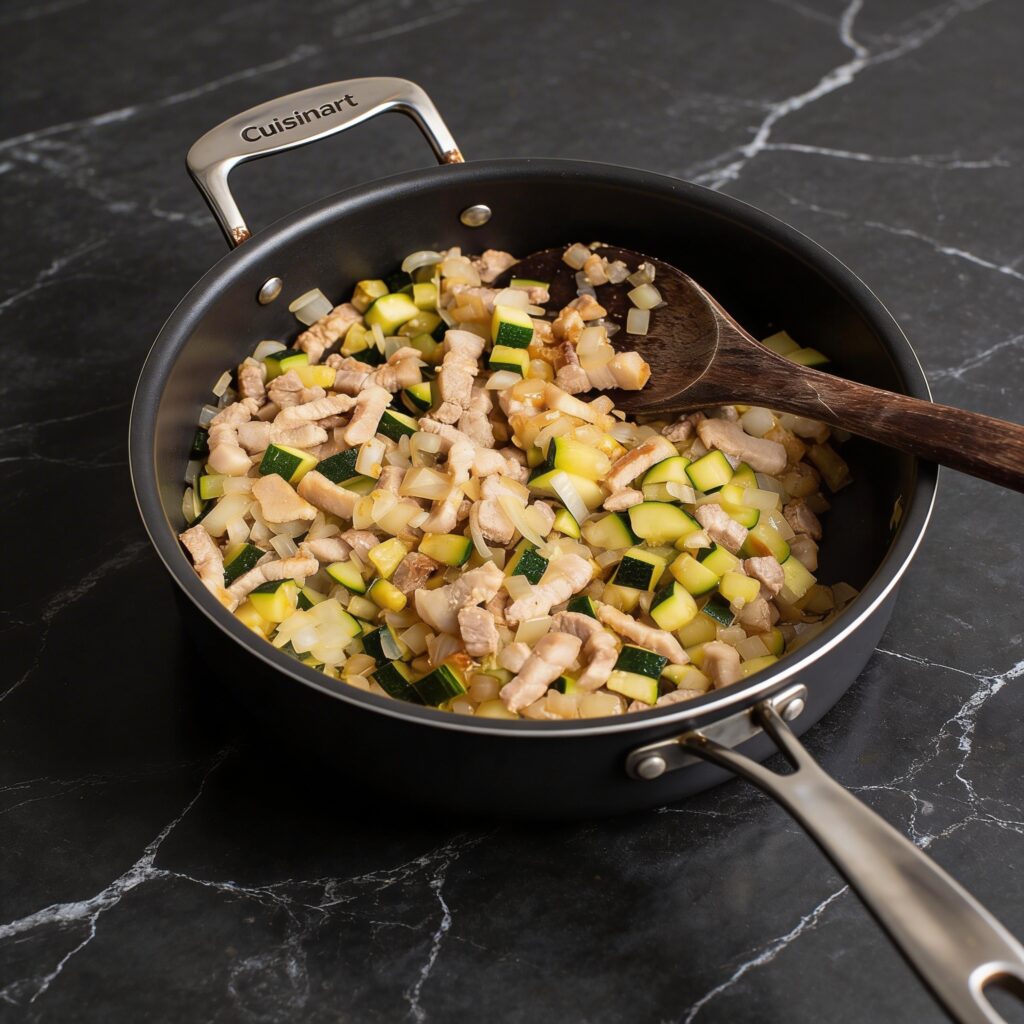
Add the diced onions, zucchini, potato, and cabbage to the pan.
Stir everything together and cook for about 5–6 minutes until the onions soften and the vegetables begin to release their moisture.
The onions are key—they provide sweetness that balances the salty depth of the black bean paste.
Simmer the Sauce
Add sugar and pour in the water or chicken stock.
Stir well, scraping up any browned bits from the bottom of the pan. Bring the mixture to a gentle boil, then reduce to a simmer.
Cover and cook for 8–10 minutes, or until the potatoes are tender.
The sauce will start to thicken slightly and darken beautifully.
Thicken the Sauce
Give the cornstarch slurry a quick stir, then pour it into the simmering sauce.
Stir continuously for 1–2 minutes until the sauce thickens into a glossy, rich consistency.
It should coat the back of a spoon but still flow smoothly. If too thick, add a splash of water. If too thin, simmer a bit longer.
Cook the Noodles
While the sauce finishes, bring a large pot of water to a boil.
Cook the noodles according to package instructions until chewy and tender.
Drain well but do not rinse—rinsing removes starch that helps the sauce cling to the noodles.
Assemble the Bowls
Place a generous portion of noodles into serving bowls.
Ladle the thick black bean sauce over the top. Be generous—the noodles should be well coated.
Top with fresh julienned cucumber for crunch and brightness.
Serve with pickled yellow radish on the side for contrast.
Mix Before Eating
Traditionally, Jjajangmyeon is thoroughly mixed before eating.
Use chopsticks to toss the noodles and sauce together until evenly coated. The glossy black sauce should cling beautifully to every strand.
Each bite delivers savory pork, tender vegetables, and chewy noodles in perfect balance.
Tips for Perfect Jjajangmyeon
- Always fry the chunjang before adding liquid.
- Dice vegetables evenly for consistent texture.
- Don’t overcook the noodles—they should remain chewy.
- Adjust sweetness to your preference.
- Serve immediately for best texture.
Flavor Variations
- Substitute shrimp or squid for seafood jjajangmyeon.
- Add mushrooms for extra earthiness.
- Use chicken instead of pork if preferred.
- Make it spicy by adding gochugaru or chili oil.
These variations allow you to tailor the dish to your taste while keeping the signature black bean flavor intact.
Storage and Reheating
Store leftover sauce separately from noodles in airtight containers for up to 3 days.
Reheat the sauce gently on the stovetop, adding a splash of water if needed.
Cook fresh noodles for best results when serving leftovers.
Final Thoughts
Jjajangmyeon is the ultimate comfort noodle dish—rich, savory, slightly sweet, and deeply satisfying. The thick black bean sauce clings perfectly to chewy noodles, while fresh cucumber adds brightness and crunch.
Though it may look restaurant-worthy, this homemade version is completely achievable and incredibly rewarding. Once you master the technique of frying the chunjang and balancing the flavors, you’ll find yourself craving this bold, glossy noodle bowl again and again.
Deeply savory, comforting, and utterly delicious—Jjajangmyeon is a dish that turns simple ingredients into something unforgettable.