Johnnycakes (also called journey cakes or hoecakes) are one of America’s oldest and simplest breads. With roots in Native American cuisine, these humble cornmeal flatbreads sustained colonists and pioneers for centuries.
Made from just stone-ground cornmeal, water, and salt, they cook quickly on a hot griddle into thin cakes that are wonderfully crisp around the edges and creamy-soft in the middle. While traditionalists insist on just the basic ingredients, a small addition of milk or sweetener can soften their character.
Serve them hot with butter and maple syrup for a rustic breakfast, or alongside chili, soup, or stew as a hearty, gluten-free bread alternative. Their simplicity is their strength.
The Debate & Technique of Authentic Johnnycakes
The soul of a johnnycake is its stone-ground white or yellow cornmeal. This coarsely ground meal retains more of the corn’s germ and flavor than modern, steel-roller milled cornmeal, giving the cakes a distinct, nutty taste and slightly gritty texture that is essential to their character.
The great debate among New Englanders is over liquid: water vs. milk. Purists in Rhode Island and coastal areas use only boiling water poured over the cornmeal to create a thick, porridge-like “mush,” which is then fried. This yields a drier, crisper cake with a pronounced corn flavor. Inland variations often use milk or buttermilk for a richer, more pancake-like texture.
The key to the signature texture is a resting period for the batter (10-20 minutes), which allows the cornmeal to fully hydrate. Cooking them in a well-seasoned cast-iron skillet or on a griddle with a generous amount of fat (traditionally bacon grease or butter) creates the essential crispy, lacy, golden-brown edges.
Instructions
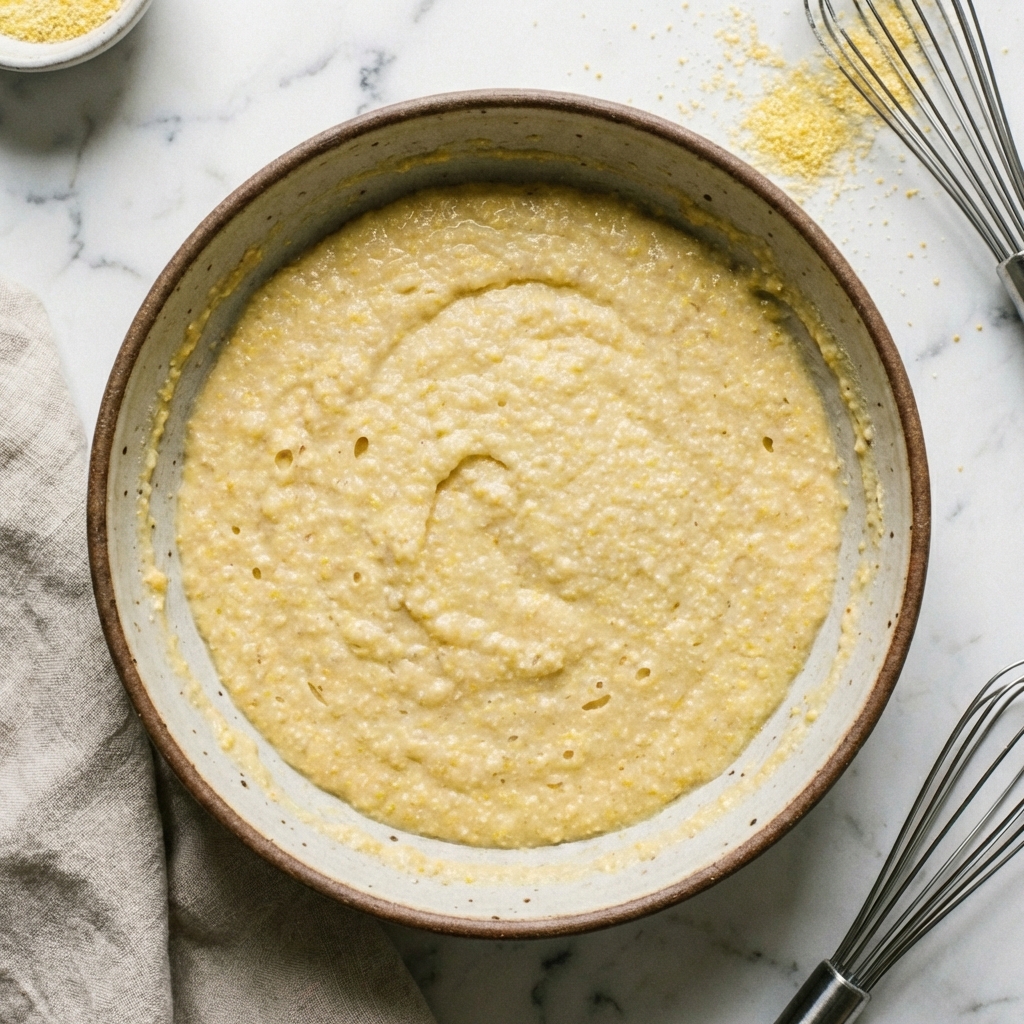
The Hydrated Cornmeal Mush (Result of Mixing & Resting)
In a medium heatproof bowl, whisk together the cornmeal and salt. Carefully pour in 1 cup of boiling water and stir vigorously with a wooden spoon until a thick, cohesive paste forms. It will look like soft polenta or porridge.
Cover and let the mixture rest for 10-15 minutes to allow the cornmeal to fully absorb the water. After resting, stir again. If the batter is too thick to drop from a spoon, add more boiling water, 1 tablespoon at a time, until it reaches a thick but pourable consistency.
The Preheated & Greased Skillet (Result of Pan Prep)
Heat a heavy cast-iron skillet or griddle over medium heat. Add 1 tablespoon of your chosen fat (bacon grease is traditional) and let it melt and get hot. The pan is ready when a drop of water sizzles immediately.
The Spooned Batter in the Skillet (Result of Portioning)
Using a large spoon or a ¼-cup measure, drop portions of the thick batter onto the hot, greased skillet. Use the back of the spoon to gently spread each portion into a rough circle, about 3-4 inches wide and ½-inch thick. Leave space between them.
The Partially Cooked Johnnycakes (Result of First Side Cook)
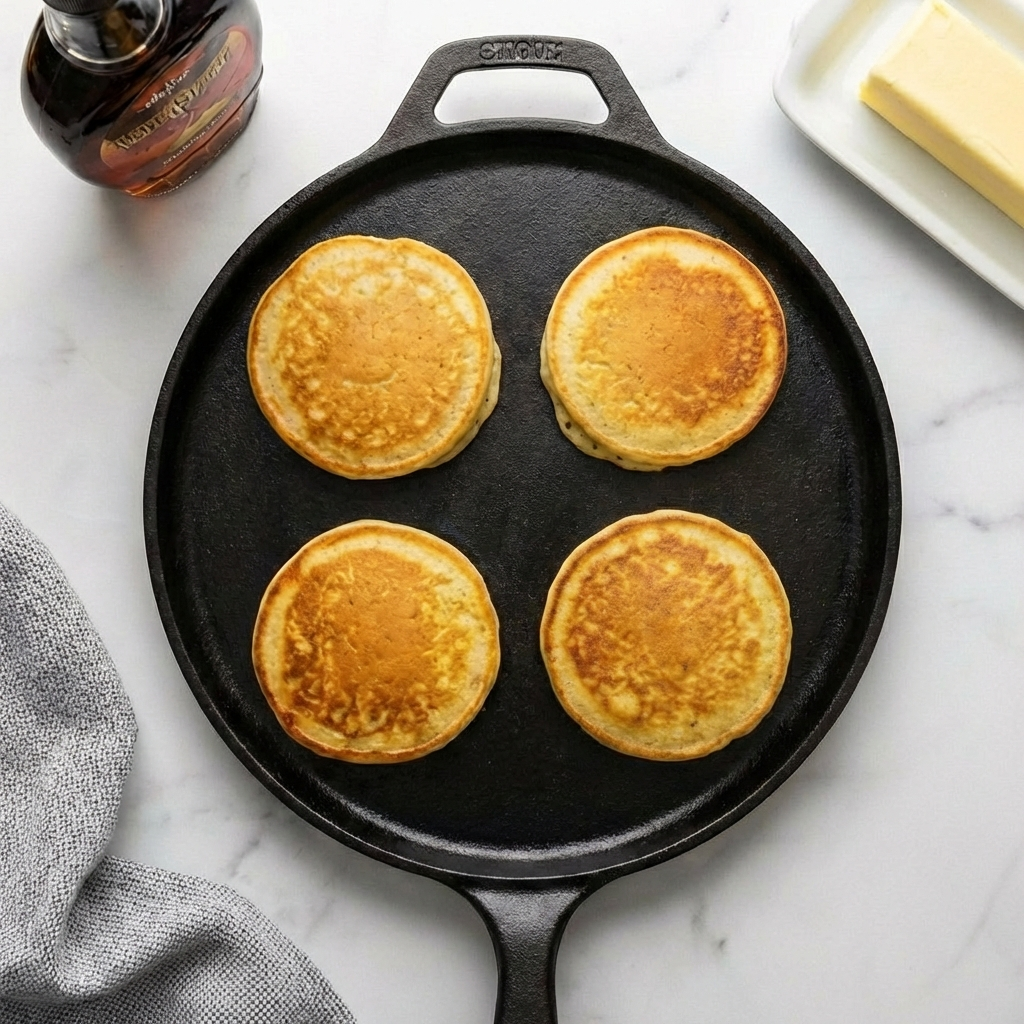
Cook for 4-5 minutes on the first side, until the edges look dry and set, the bottoms are deeply golden brown and crispy, and bubbles may appear on the surface.
The Fully Cooked Johnnycakes (Result of Flip & Final Cook)
Carefully flip each cake with a thin spatula. Cook for another 3-4 minutes on the second side until golden brown and cooked through. Transfer to a warm plate. Add more fat to the skillet as needed for subsequent batches.
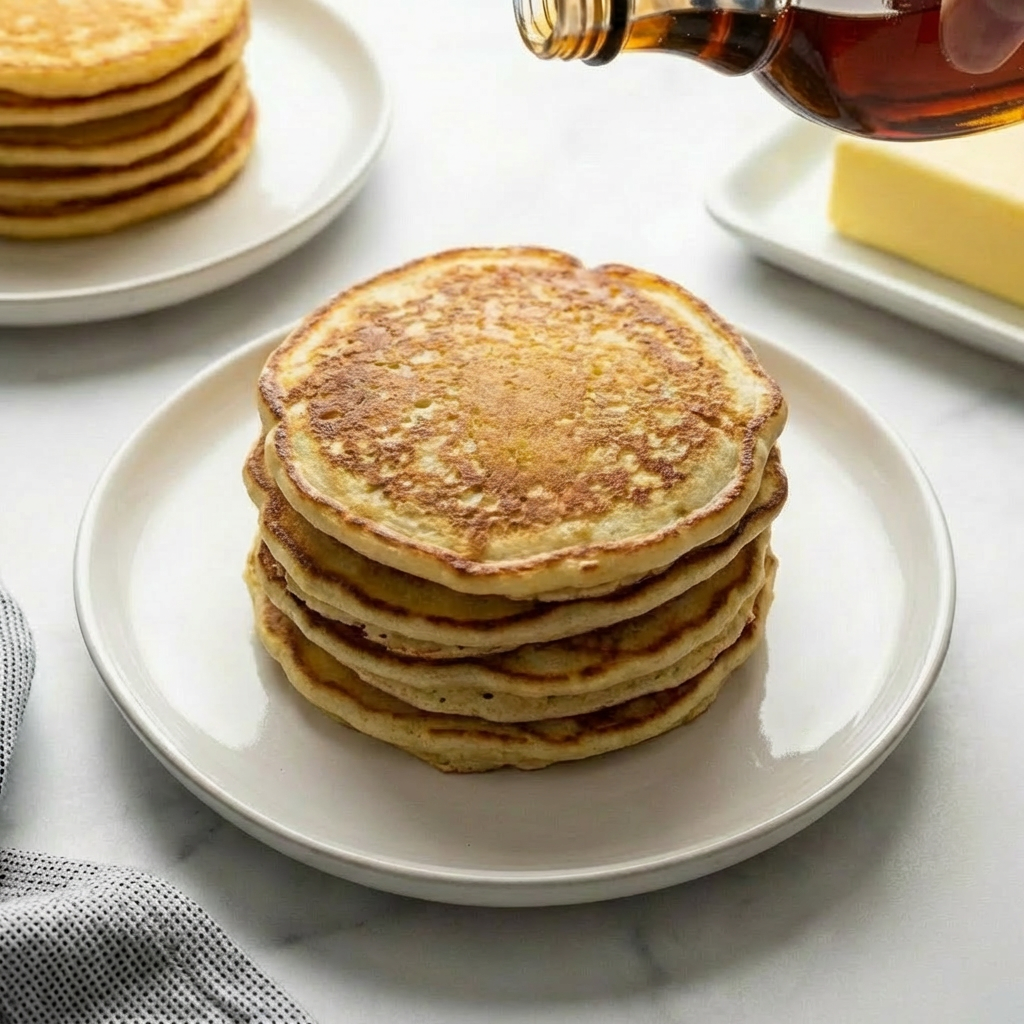
The Finished Stack (Result of Keeping Warm)
Keep cooked johnnycakes warm in a low oven (200°F / 95°C) while you finish the remaining batter. They are best served immediately, hot off the griddle.
Serve & Store
Serve hot with plenty of butter and maple syrup for breakfast, or as a bread side for savory meals. Leftovers can be stored in an airtight container in the refrigerator for up to 2 days. Reheat in a toaster or dry skillet to recrisp.
Pro-Tips for Authentic Texture & Flavor
- Cornmeal is Everything: Seek out authentic, stone-ground cornmeal from a mill if possible. It makes a profound difference in flavor and texture.
- Boiling Water is Key: Pouring boiling water over the cornmeal partially cooks it, resulting in a creamier interior texture in the finished cake.
- Don’t Skimp on the Fat: A well-greased skillet is non-negotiable for achieving the signature crispy, lacy edges. Bacon grease adds incredible flavor.
- Patience with the Flip: Wait until the edges are fully set and the bottom is deeply colored before flipping. If you try too early, they may stick or break.
- Adjust Thickness: For a crisper, thinner cake (like a flatbread), spread the batter thinner. For a thicker, more pancake-like center, leave it thicker.
- Serve Immediately: Johnnycakes are at their peak straight from the skillet. They lose their crispness as they sit.
This simple, historic bread is a delicious reminder of how few ingredients are needed to create something truly satisfying.