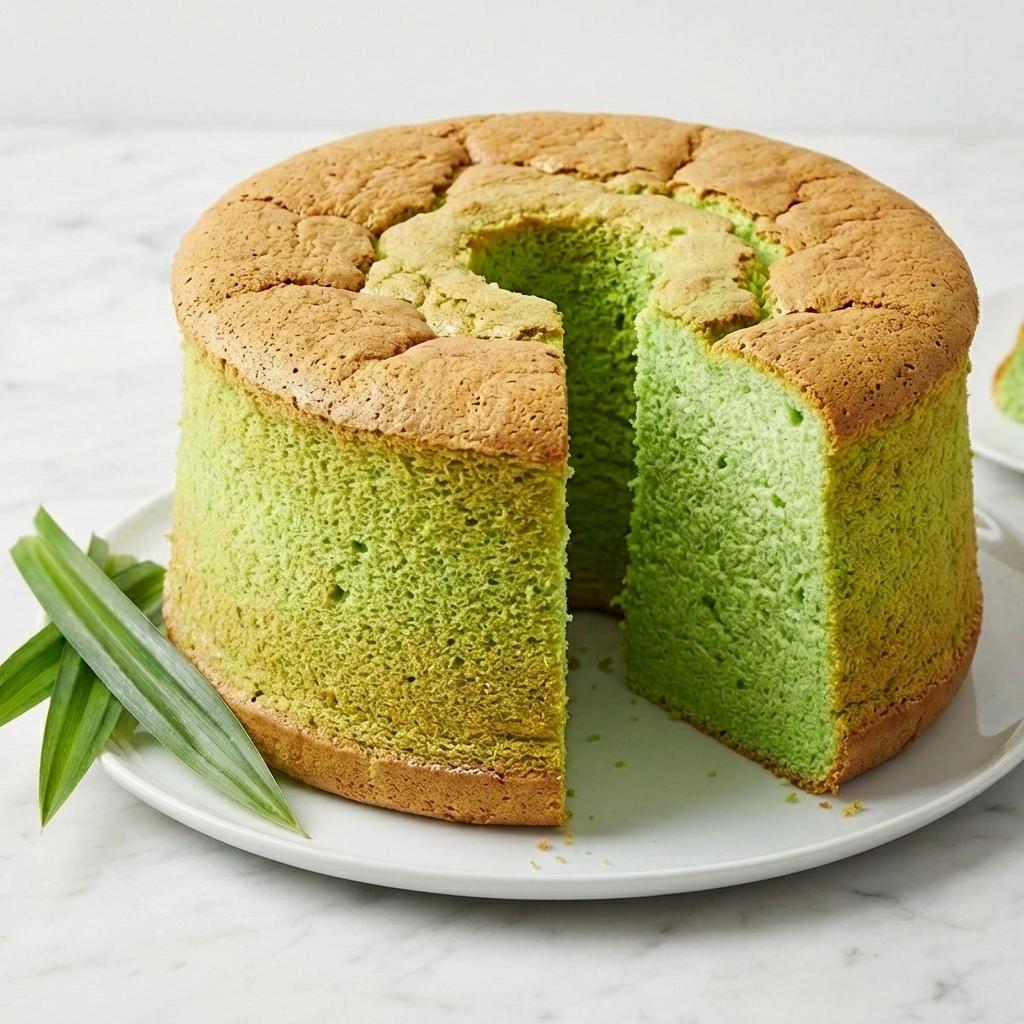
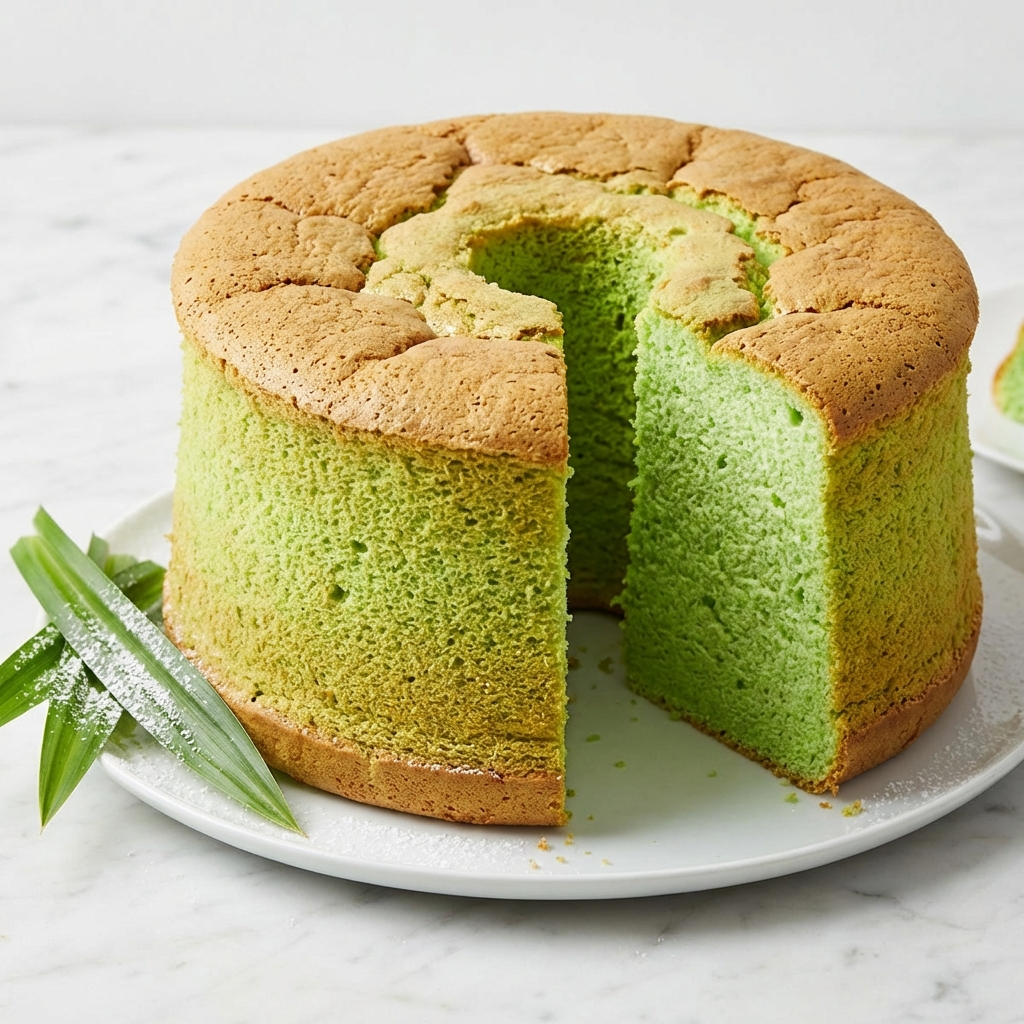
Experience the exquisite flavor and texture of a classic Pandan Chiffon Cake. This Southeast Asian masterpiece gets its mesmerizing green color and distinctive, fragrant aroma from fresh pandan juice, and its incredible lightness from a carefully aerated egg-white foam.
Baked in a special tube pan and cooled upside down, this cake achieves an unparalleled height and a texture that’s both cloud-like and moist. It’s a showstopping dessert that’s surprisingly delicate and not overly sweet.
The Architecture of Air: Chiffon Cake Science
The ethereal texture of a chiffon cake is a masterpiece of foam and emulsion chemistry. Unlike butter cakes, it uses liquid oil (which stays liquid at room temperature) to keep the crumb exceptionally moist and tender.
The leavening comes almost entirely from a stabilized meringue—egg whites beaten to stiff peaks with sugar. This meringue is gently folded into the batter, creating thousands of tiny air bubbles that expand in the oven’s heat. The ungreased tube pan is crucial: the central tube helps heat distribute evenly, and the cake can cling to the sides as it rises sky-high.
Cooling it upside down is non-negotiable; it stretches the delicate web of protein and starch downward, preventing the cake from collapsing under its own weight as it cools, ensuring maximum height and an even, airy crumb.
Instructions
Make Pandan Juice & Prepare Pan
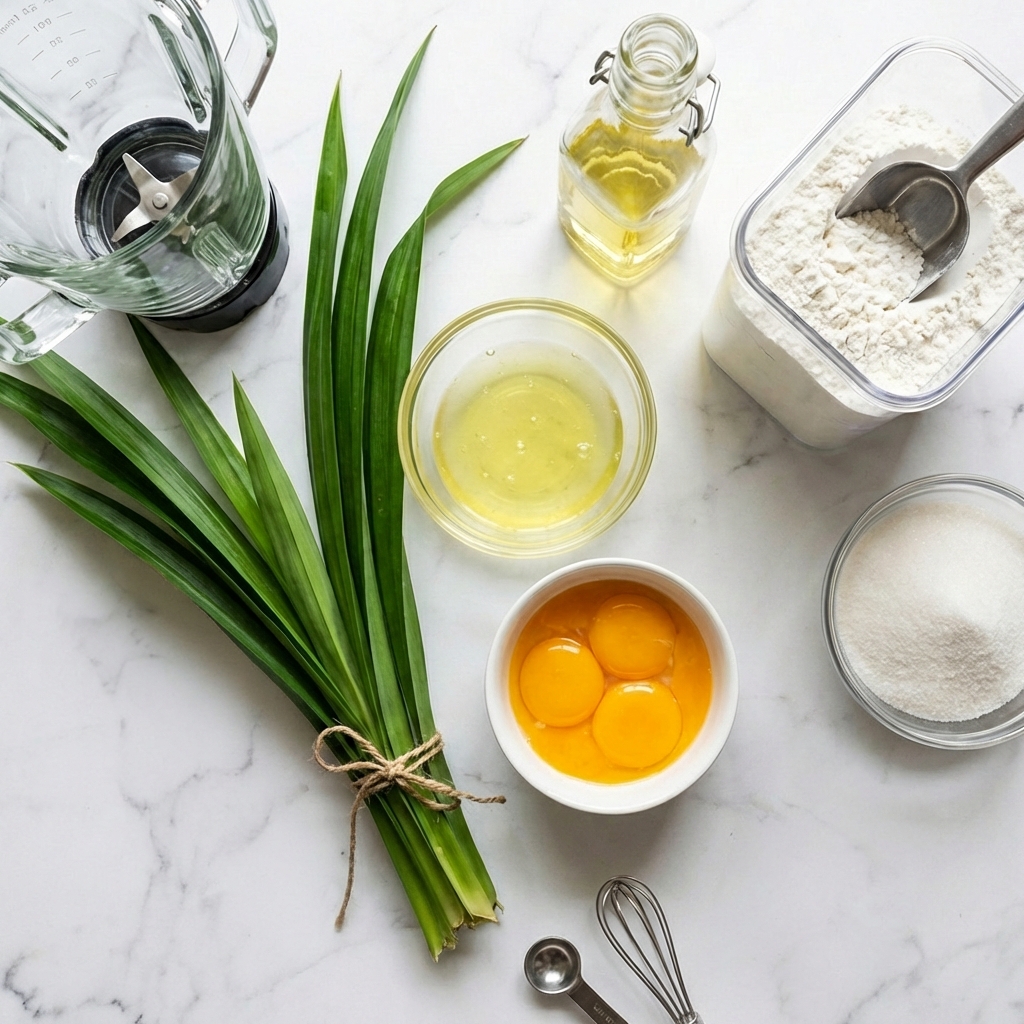
Preheat oven to 325°F (165°C). Do not grease the tube pan. Blend the fresh pandan leaves with water until pulverized. Strain through a fine-mesh sieve or cheesecloth, squeezing to extract as much juice as possible. You should have about ¾ cup. Set aside.
Make the Yolk Batter
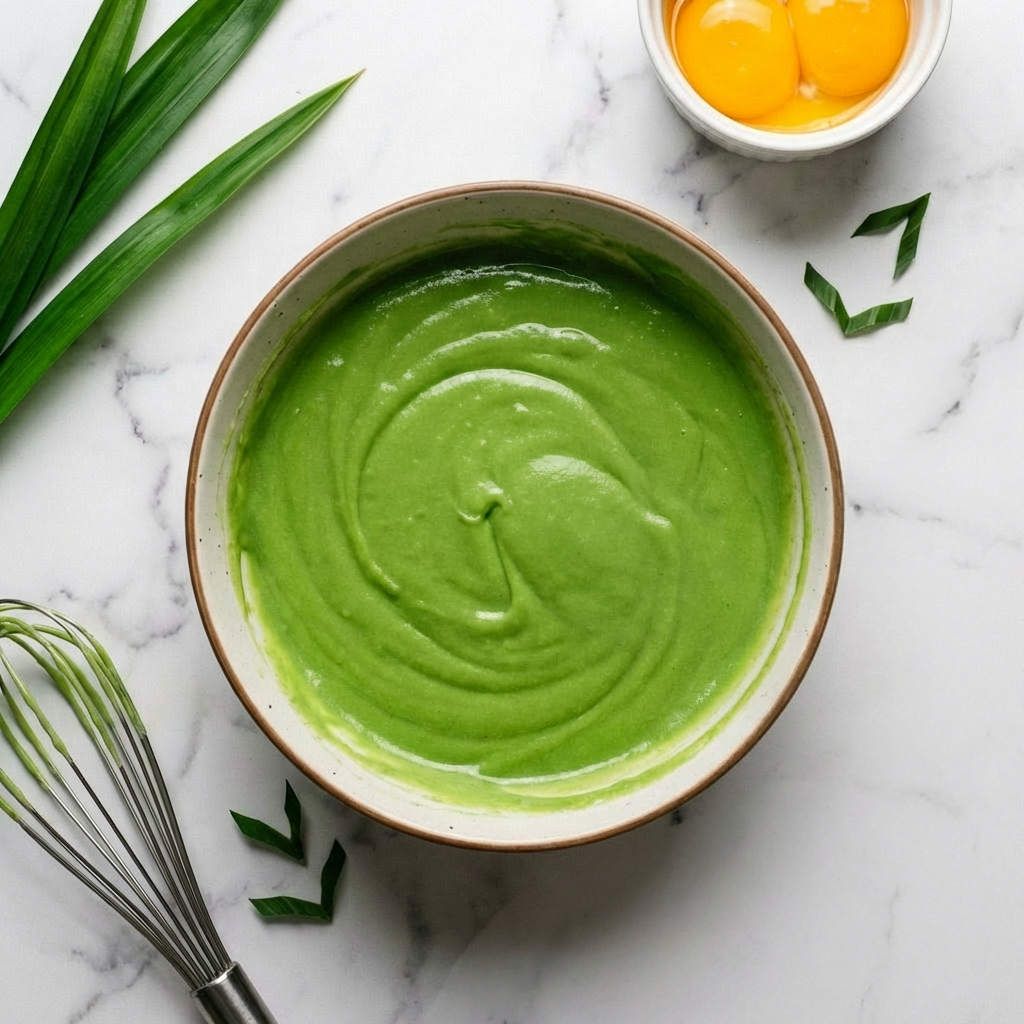
In a large bowl, sift together the cake flour, baking powder, and salt. In a separate medium bowl, whisk the egg yolks with ½ cup (100g) of the sugar until pale and slightly thickened. Whisk in the oil, pandan juice, and vanilla extract until smooth and emulsified.
Add this wet mixture to the dry ingredients and whisk just until smooth and free of lumps. The batter will be thick.
Whip the Meringue
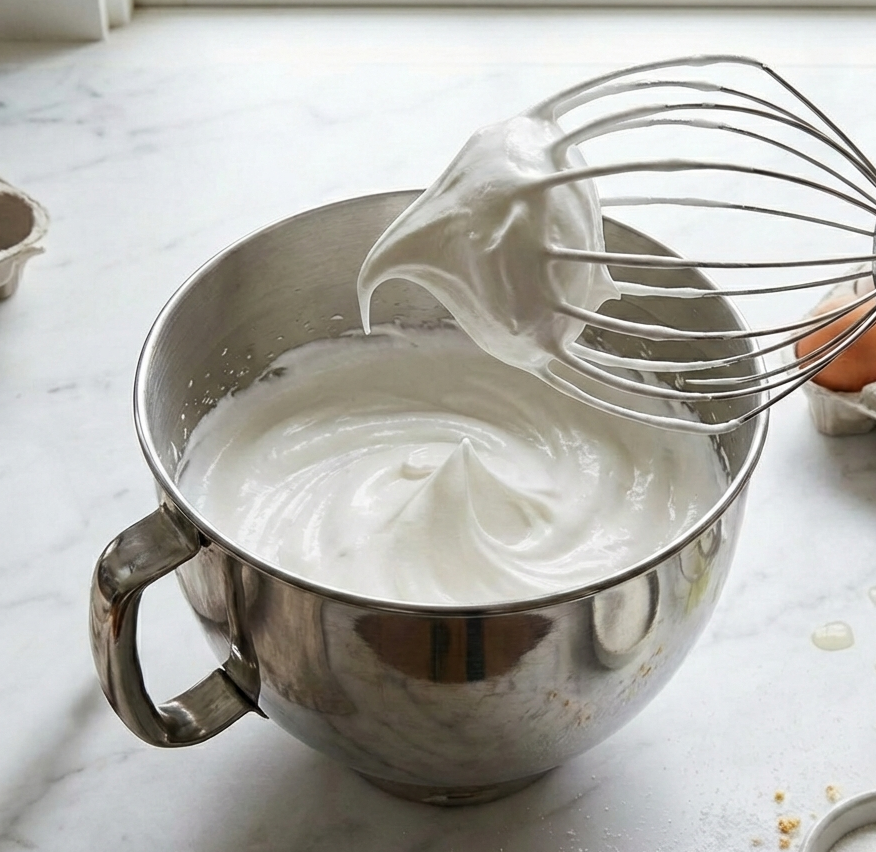
In the clean, dry bowl of a stand mixer fitted with the whisk attachment (or using a hand mixer), beat the egg whites and cream of tartar on medium speed until frothy.
Gradually add the remaining ¾ cup (150g) of sugar, about 1 tablespoon at a time, while beating on medium-high speed. Continue beating until stiff, glossy peaks form. The meringue should hold its shape when the whisk is lifted.
Fold & Combine
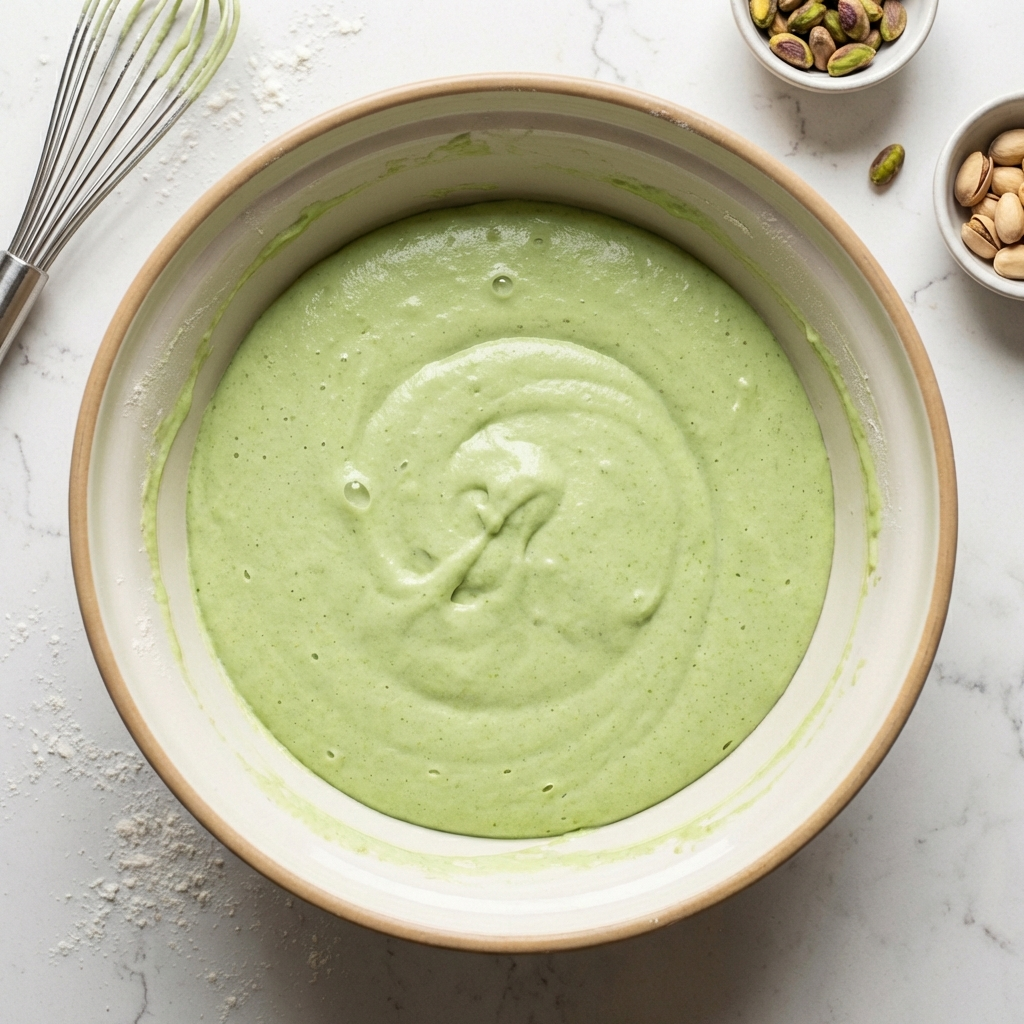
Using a large rubber spatula, gently fold about one-third of the meringue into the yolk batter to lighten it. Then, carefully fold in the remaining meringue in two additions. Fold just until no large white streaks remain, being careful not to deflate the batter. It should be light, fluffy, and uniformly green.
Bake
Pour the batter into the ungreased tube pan. Gently run a thin knife or skewer through the batter in a circular motion to pop any large air bubbles. Bake on the center rack for 55-65 minutes, or until the top is golden brown and springs back when lightly touched, and a long skewer inserted into the center comes out clean.
Cool Upside Down
Immediately upon removing the cake from the oven, invert the pan onto its “feet” or over the neck of a glass bottle. Let the cake cool completely upside down for at least 2-3 hours. This step is critical to prevent collapse.
Unmold & Serve
Once completely cool, run a long, thin flexible knife or offset spatula carefully around the outer edge and inner tube of the pan to release the cake. Gently push the removable bottom up and out. Use a knife to separate the cake from the bottom. Place on a serving plate. Slice with a serrated knife.
Pro-Tips for Chiffon Success
- Use Cake Flour: Its lower protein content is essential for a tender, soft crumb.
- Room Temperature Eggs: They whip to a greater volume, creating a more stable meringue.
- Spotless Bowl for Meringue: Any trace of fat (yolk or oil) will prevent the whites from whipping properly.
- Fold Gently & Efficiently: Use a cutting and folding motion with a spatula. Under-mixing is better than over-mixing and deflating the batter.
- Never Grease the Pan: The cake needs to cling to the sides to climb as it bakes.
- Cool Completely Inverted: Do not rush this step—the cake’s structure sets as it cools.
- Fresh vs. Extract: Fresh pandan juice gives the best flavor and color. If using extract, look for a pure, concentrated variety and add it drop-by-drop to the liquid.
This Pandan Chiffon Cake is a test of technique that yields an extraordinarily beautiful and delicious reward.