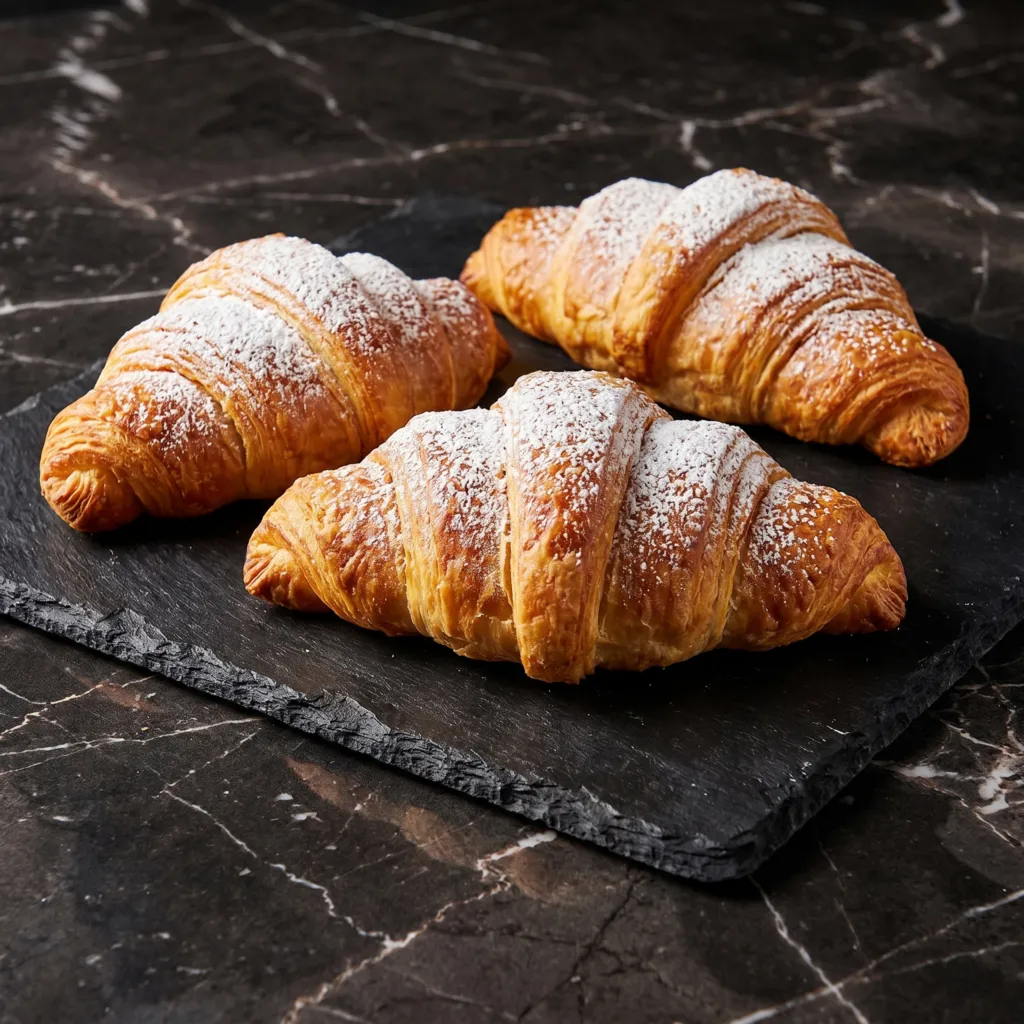
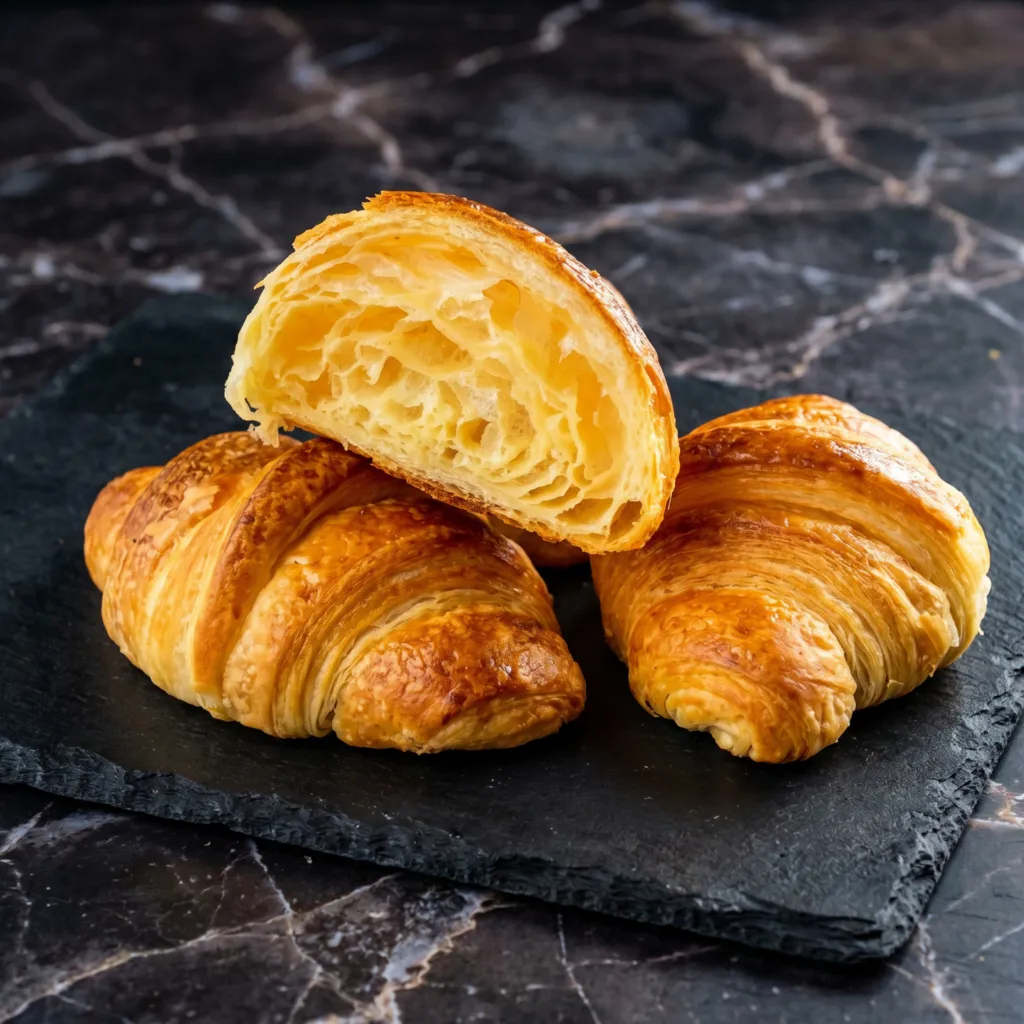
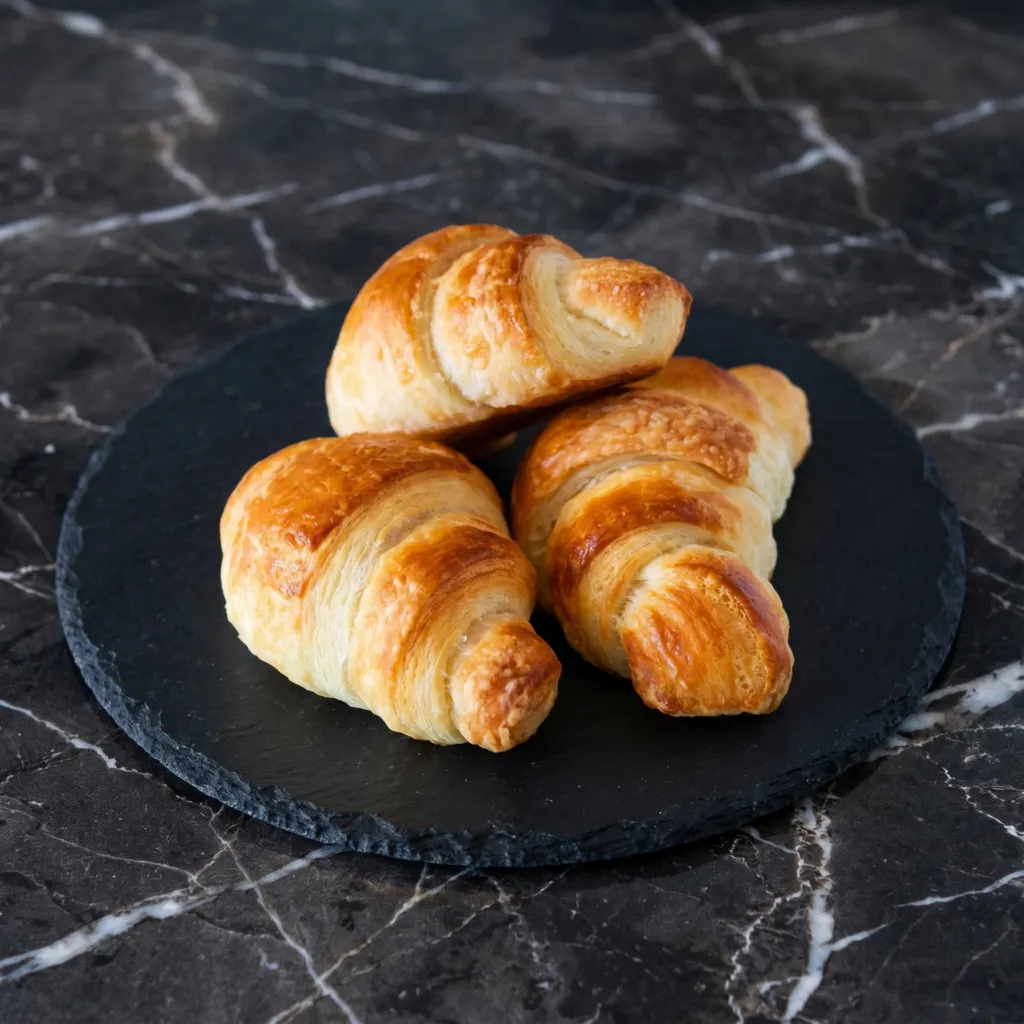
There’s nothing quite like a perfect croissant—golden, crescent-shaped, with hundreds of delicate, buttery layers that shatter at the first bite and melt on your tongue. Making them at home is a rite of passage for any serious baker, a beautiful dance of dough and butter that takes time, patience, and precision.
But here’s the truth: it’s not as hard as you think. Yes, it’s a project. Yes, there are multiple steps and rests. But the process is deeply satisfying, and the result—warm, fresh croissants from your own oven—is nothing short of magical.
This guide walks you through every step of lamination, from the détrempe (dough) to the beurrage (butter block) to the final shaping and baking. Your kitchen is about to smell like a Parisian patisserie.
Ingredients
Instructions
Make the Détrempe (Dough)
In a small bowl, dissolve the yeast in the lukewarm milk and let sit for 5-10 minutes until foamy. In the bowl of a stand mixer fitted with the dough hook, combine the flour, sugar, and salt.
Add the yeast mixture and the melted butter. Mix on low speed until a shaggy dough forms, then knead on medium-low for 3-4 minutes until smooth. The dough should be soft and slightly tacky but not sticky. Shape into a rectangle about 1-inch thick, wrap in plastic, and refrigerate for at least 2 hours, preferably overnight.
Prepare the Beurrage (Butter Block)
Place the cold butter between two sheets of parchment paper. Using a rolling pin, pound and roll the butter into a 7×7-inch square (about ½ inch thick). If the butter becomes too soft, refrigerate it.
Mix the 2 tablespoons flour into the butter as you work—this helps absorb excess moisture. The butter should be cold but pliable, the same consistency as the chilled dough.
Encase the Butter
On a lightly floured surface, roll the chilled dough into a 10×10-inch square. Place the butter square diagonally on the dough, rotated 45 degrees so the corners of the butter point to the edges of the dough.
Fold the four corners of the dough over the butter, meeting in the center and sealing completely. Pinch the seams to enclose the butter entirely.
First Fold (Letter Fold)
Roll the dough into a long rectangle, about 8×24 inches, keeping the edges straight. Fold the dough like a letter: fold the top third down, then the bottom third up over it. This is a single fold. Wrap and refrigerate for 1 hour.
Second Fold
Remove the dough from the fridge. Rotate it 90 degrees so the open ends are facing you. Roll again into a long rectangle, about 8×24 inches. Perform another letter fold. Wrap and refrigerate for 1 hour.
Third Fold
Repeat the process one more time: rotate, roll, and fold. You’ve now completed three single folds, creating dozens of layers. Wrap and refrigerate for at least 4 hours, preferably overnight.
Shape the Croissants
Roll the chilled dough into a large rectangle, about 12×36 inches and ¼ inch thick. Trim the edges to create a neat rectangle. Cut into triangles with a 4-inch base and 8-inch height.
Make a small slit in the center of each base. Gently stretch the triangle, then roll from the base toward the tip, keeping the tip centered underneath. Curve the ends inward to form the classic crescent shape.
Proof the Croissants
Place the shaped croissants on parchment-lined baking sheets, leaving space for expansion. Brush with egg wash.
Let proof at room temperature (75°F/24°C) for 2-3 hours, until puffy and doubled in size. They should feel light and airy and jiggle slightly when the pan is shaken.
Preheat and Egg Wash Again
Preheat your oven to 400°F (200°C). Gently brush the proofed croissants with egg wash again, being careful not to deflate them.
Bake
Bake for 15-20 minutes, until deep golden brown and crisp. Rotate the pans halfway through for even browning. Transfer to wire racks to cool slightly.
Serve and Celebrate
Serve warm, if possible, with butter and jam or simply on their own. Listen for the shatter of those hundreds of layers with every bite.
Pro-Tips for Croissant Perfection
- Use European Butter: High-butterfat butter (82%+) has less water and more fat, creating better layers and superior flavor. It’s worth seeking out.
- Temperature Is Everything: The dough and butter must be the same consistency—cold but pliable. If the butter cracks during rolling, it’s too cold; if it squishes out, it’s too warm. Work quickly and return to the fridge as needed.
- Keep Edges Straight: When rolling, maintain straight edges and right angles. Jagged edges lead to uneven layers.
- Don’t Rush the Rests: Chilling between folds relaxes the gluten and keeps the butter cold. Skipping or shortening rests leads to butter leakage and tough croissants.
- Proof Carefully: Underproofed croissants are dense; overproofed ones collapse and lose their layers. They’re ready when puffy, doubled, and jiggle slightly.
- Sharp Cutter for Triangles: Use a sharp knife or pizza cutter—dull blades pinch the layers together and prevent proper rise.
- Egg Wash Twice: The first wash before proofing adds color; the second before baking gives that gorgeous glossy finish.
- Cool on Racks: Croissants continue to crisp as they cool. Don’t leave them in the pan or they’ll steam and soften.
These Authentic French Croissants are a labor of love—and absolutely worth every moment.