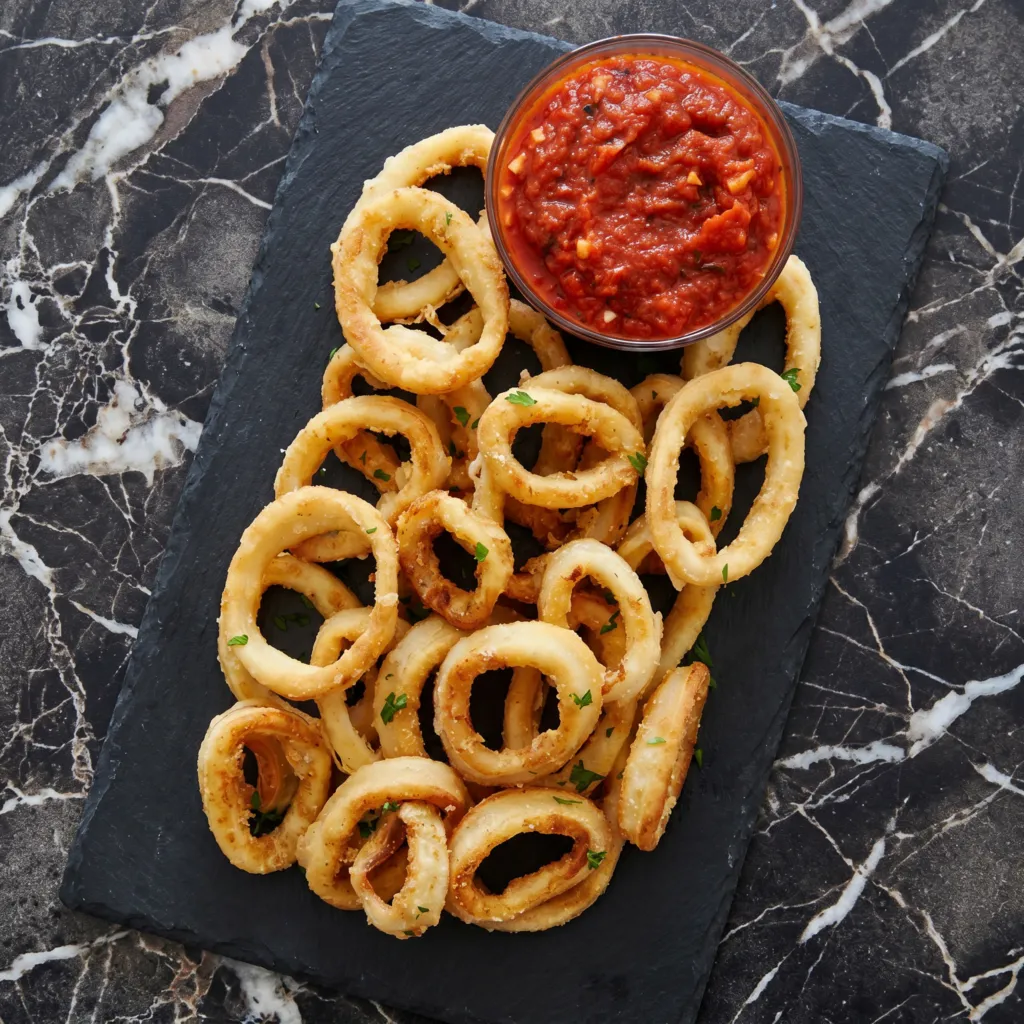
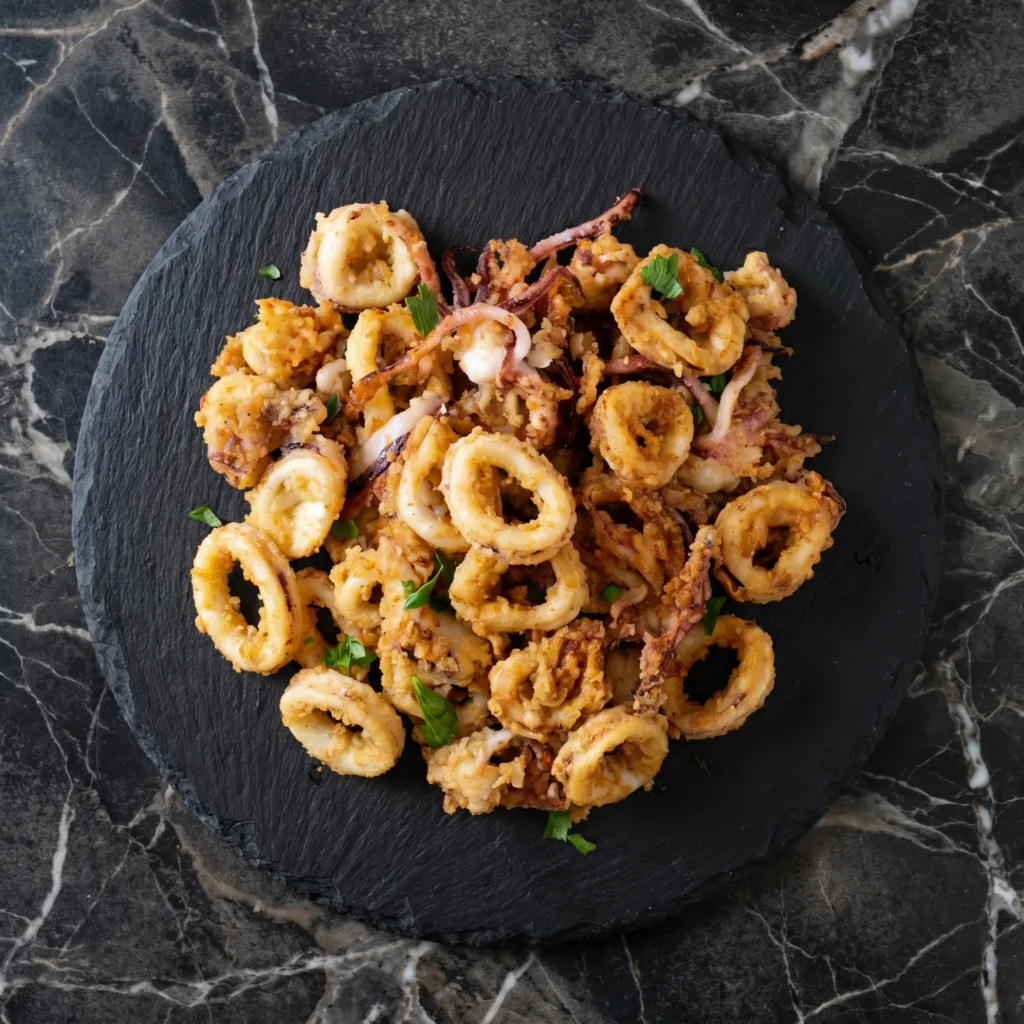
Fried calamari has a bad reputation. Most people think it’s chewy, rubbery, or greasy. That’s not the squid’s fault—it’s the cook’s. When done right, calamari is sweet, delicate, and almost buttery, wrapped in a shatteringly crisp coating that gives way with a satisfying crunch. The secret? High heat, short cooking time, and the right coating. This recipe delivers restaurant-quality fried calamari in under 15 minutes. No deep fryer required. Just a heavy pot, a thermometer, and a little confidence.
The Science of Tender vs. Rubbery Squid & The Perfect Crust
Squid is unique among seafood. Its muscle tissue is packed with collagen that behaves in two completely different ways. Cook it for 30 seconds to 1 minute at high heat, and the collagen tightens just enough to become tender. Cook it for 2–5 minutes, and the collagen seizes into rubbery, shoe-leather texture. Cook it for 30 minutes in a braise, and the collagen breaks down into gelatin, becoming tender again. For frying, you want the fast lane: 350°F (175°C) oil for 45–60 seconds max. The coating matters just as much as the cook time. A mixture of flour and cornstarch creates the ideal crust: cornstarch has no gluten, so it crisps without becoming tough or bready. It also absorbs less oil, keeping the calamari light. The resting time after coating (10–15 minutes) lets the flour hydrate slightly, which helps the coating adhere during frying instead of falling off in the oil.
Prep the Squid
If using whole squid, separate the tentacles from the bodies. Remove the hard beak from the center of the tentacles (it looks like a tiny plastic bead). Pull out the quill (clear plastic-like piece) from inside the body tube. Rinse the bodies and tentacles under cold water. Slice the bodies into ½-inch (1.25 cm) rings. Pat everything completely dry with paper towels. Wet squid = steamed calamari.
Make the Coating
In a large bowl or shallow dish, whisk together the flour, cornstarch, salt, black pepper, garlic powder, and paprika until evenly combined. The mixture should look pale beige with speckles of seasoning.
Dredge the Calamari
Add the calamari rings and tentacles to the flour mixture. Toss with your hands until every piece is lightly and evenly coated. Shake off excess flour. Transfer the coated calamari to a wire rack or plate. Let them rest for 10–15 minutes. This step is not optional—it prevents the coating from falling off in the oil.
Heat the Oil
Pour oil into a heavy-bottomed pot (like a Dutch oven) to a depth of about 2 inches (5 cm). Heat over medium-high heat until the oil reaches 350°F (175°C). Use a deep-fry thermometer. No thermometer? Drop in a small piece of bread—it should brown in 45 seconds.
Make the Marinara (while oil heats)
In a small saucepan, heat olive oil over medium heat. Add the minced garlic and cook for 30 seconds until fragrant. Add crushed tomatoes, oregano, salt, and pepper. Simmer for 5 minutes until slightly thickened. Set aside.
Fry the Calamari in Batches
Carefully drop a single layer of calamari into the hot oil—do not overcrowd. Fry for 45–60 seconds, stirring gently with a slotted spoon or spider, until the coating is golden brown and the calamari is opaque. Overcooking makes it rubbery, so watch the clock. Remove with a slotted spoon and drain on a paper towel-lined plate. Repeat with remaining batches, letting the oil return to 350°F between batches.
Season Immediately
While the fried calamari is still hot, sprinkle with a pinch of flaky salt. This is when the salt sticks best.
Serve
Transfer the fried calamari to a serving platter. Sprinkle with fresh parsley. Arrange lemon wedges around the edges. Place the warm marinara bowl in the center. Serve immediately—fried calamari loses its crispness within 10 minutes.
Pro-Tips for the Crispiest, Tenderest Calamari
- Dry the squid obsessively: Any moisture creates steam, and steam makes the coating soggy. Pat with paper towels, then let air-dry on a rack for 5 minutes if you have time.
- Don’t skip the cornstarch: Flour alone makes a heavy, bready crust. Cornstarch is the secret to that light, shattering texture.
- Oil temperature is everything: Too cool (below 325°F / 160°C) and the calamari absorbs oil and turns greasy. Too hot (above 375°F / 190°C) and the coating burns before the squid cooks.
- Work in small batches: Adding too much calamari at once drops the oil temperature instantly. A single layer only.
- Fresh vs. frozen: Frozen squid is perfectly fine and often cleaner than fresh. Just thaw it overnight in the refrigerator and pat it very dry.
- Don’t skip the resting time after dredging: Those 10–15 minutes allow the flour to hydrate slightly, creating a glue-like layer that sticks to the squid instead of floating off in the fryer. This is the difference between a perfect crust and a pile of fried crumbs next to naked squid. Serve with a cold beer or a glass of Pinot Grigio, and watch these disappear.